César Henao is a Colombian-born French artist. He began his artistic practice and his first paintings as a self-taught artist at the age of 16. Influenced by the Optical Art movement, he continued his training at the Ecole Nationale Supérieure des Beaux-Arts of Paris. He has participated in several group exhibitions, co-founded the Polystructure group and met the most important art critic of the post-war period in France, Pierre Restany, who wrote about his work during his studies. At the end of his course, a jury chaired by the Belgian kinetic sculptor, Pol Bury, will award him his diploma with the highest distinction awarded by this institution. Cultivating curiosity for emerging information systems, technology, communication and the use of new materials in industry, he builds his first major installation in the heart of Ciudad Perdida, a lost city in the Colombian rainforest with the intervention of the first SPOT-1 satellite in 1987 in response to the dangers caused by the Chernobyl disaster. César Henao projects through his new creations a vision enriched by his multiple practices and experiences. An asset that has been developed continuously since his first works and interventions with the earth observation satellite. His recent body of work addresses the space of aesthetic representation in the work from the concept of singularity.
THE CARLOS REID GALLERY
HOME | PAINTINGS |
PHOTOGRAPHY
| PRINTS
| SCULPTURE
| ART INSTALLATIONS
| HOME FURNISHINGS
| JEWELRY
| BLOG | STORE | ART AUCTIONS
Cesar Henao
| France
Contemporary and Modern Photography

César Henao
(b.1956)
S-I-A N°3Photography, 23 5/8" x 23 5/8" x 0.1 in (60 x 60 x 0.3 cm
1/3 Limited Editions
$9,600

César Henao
(b.1956)
S-I-A N°4
Photography, 23 5/8" x 23 5/8" x 0.1 in (60 x 60 x 0.3 cm
1/3 Limited Editions
$9,600
Buy Now
S-I-A N°4
Photography, 23 5/8" x 23 5/8" x 0.1 in (60 x 60 x 0.3 cm
1/3 Limited Editions
$9,600

César Henao
(b.1956)
S-I-A N°2Photography, 23 5/8" x 23 5/8" x 0.1 in (60 x 60 x 0.3 cm
1/3 Limited Editions
$9,600

César Henao
(b.1956)
S-I-A N°1
Photography, 23 5/8" x 23 5/8" x 0.1 in (60 x 60 x 0.3 cm
1/3 Limited Editions
$9,600
Buy Now
S-I-A N°1
Photography, 23 5/8" x 23 5/8" x 0.1 in (60 x 60 x 0.3 cm
1/3 Limited Editions
$9,600
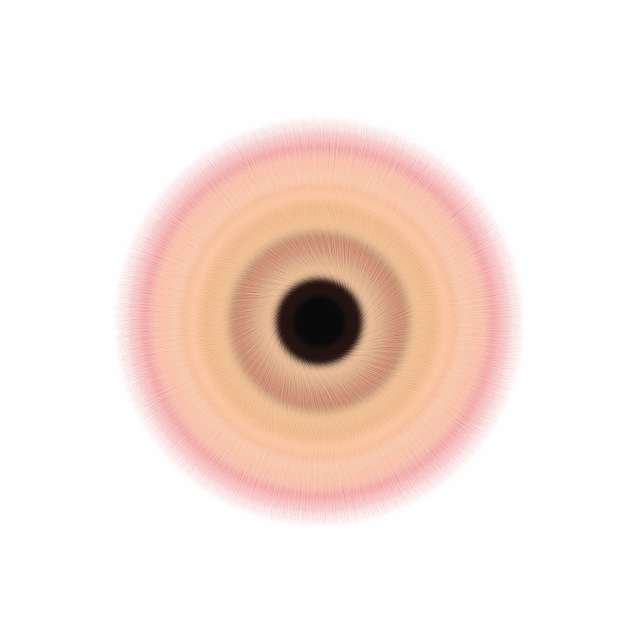
César Henao
(b.1956)
PhotoescentiaPhotography, 39 3/8" H x 39 3/8" W x 1 in (100 x 100 x 0.3 cm)
1/3 Limited Editions
$30,000
César Henao
(b.1956)
S-I-A N°1
Photography, 23 5/8" x 23 5/8" x 0.1 in (60 x 60 x 0.3 c
1/3 Limited Editions
$9,000
Buy Now
S-I-A N°1
Photography, 23 5/8" x 23 5/8" x 0.1 in (60 x 60 x 0.3 c
1/3 Limited Editions
$9,000

César Henao
(b.1956)
Neblula
Photography, 39 3/8" H x 39 3/8" W x 1 in (100 x 100 x 0.3 cm)
1/3 Limited Editions
$30,000

César Henao
(b.1956)
Nothingness
Photography, H 59 1/16" x W 59 1/16" in (150 x 150 cm)
1/3 Limited Editions
$16,000
Buy Now
Nothingness
Photography, H 59 1/16" x W 59 1/16" in (150 x 150 cm)
1/3 Limited Editions
$16,000

César Henao
(b.1956)
ANI-MOLA
Photography, 39 3/8" H x 39 3/8" W x 1 in (100 x 100 x 0.3 cm)
1/3 Limited Editions
$30,000

César Henao
(b.1956)
Ipsé
Photography, H 59 1/16" X W 59 1/16" in (150 x 150 cm)
1/3 Limited Editions
$16,000
Buy Now
Ipsé
Photography, H 59 1/16" X W 59 1/16" in (150 x 150 cm)
1/3 Limited Editions
$16,000

Artist Statement:
"My work explores through color, form and new materials, the space of perception, sensory, vision, concept, embodied experience and the feelings of the "I". I strive in my art to make these concerns more intelligible and relevant to society in general. For me, art remains a crucial means of transforming the thinking of individuals into an edifying action for the world. My recent works address the difficulty of defining singularity and its representation in aesthetics. I follow the trail of that singularity in search of more clarity and represent it to myself as three shadows projected on our world: the singularity of the being that tries to define and not without difficulty the ontological specificity of the individual; the gravitational singularity or black hole that questions the real continuity of the universe, that is, the continuity of space and time; and finally the technological singularity that predicts the advent of an autonomous and omniscient artificial intelligence superior to human intelligence."...Cesar Henao
PRESENTATION
Recent works | «Infinitisations»
The artworks presented are part of the "Infinitisations" series. They find their inspiration in the imaginary relationship between what I can call "the singularity of being" and that of a “gravitational singularity” or "black hole".
These works establish a relationship of approach and visual tension between finiteness, that of the observer and the infinity of black, the one that evokes the end of space.
In this movement from one to the other, the two singularities will coincide in time but without necessarily getting lost in each other as predicted for any object as a "black hole" approaches.
From this imagined and unpredictable experience in the face of the inexorable force of gravity emerges, like an apparition, a kind of new metaphysics of the presence to oneself.
This feeling serves as a sketch to describe a paradigm for any phenomenon of the possible, of the future, of desire...
"Appearance" suggests a potentially unfoldable presence at "infinity" that now questions the visible.
Sight ignores the eye. The "infinite pulverence" in the work is an internal experience of intensities that are accomplished without context: a kinesthetic process of absolute fragments.
Singularity is in a way the meaning itself as Jean Luc Nancy can formulate it in "The enigma of singularity"
In the work, on the other hand, it is the gestures of the hand that bring out the image of a space in the abyss. A "perforated mirror" of the collapse of the conscious / unconscious self that never stops recovering and questions itself to infinity.
Biographical notes, artistic influences, trajectories, and projects
Born in 1956, César Henao began his artistic practice and his first self-taught paintings at the age of 16 in Colombia. He was influenced by the sculptures of Edgar Negret and the paintings of Omar Rayo, then by the works of Jesús Soto and Carlos Cruz Diez.
In 1976, on the occasion of Julio Le Parc's solo exhibition at the Museum of Modern Art in Bogota, he discovered the GRAV (Groupe de Recherche Audiovisuelle) catalogue, which presents the group's principles and concepts of action and the works of its members, Horacio GARCÍA ROSSI, Julio LE PARC, François MORELLET, Francisco SOBRINO, Joël STEIN and YvarAL.
After graduating with a bachelor's degree, he studied architecture and management at the University of the Andes and founded his first communication and image company in Bogotá.
At the age of 24, he decided to pursue his artistic training and travel to several European countries and the United States.
Later, in France, he passed the painting competition and was admitted to the Ecole Nationale Supérieure des Beaux-Arts in Paris, where he followed a five-year training course in the painting section. He cultivates his curiosity for emerging information systems, technology, communication and the use of new materials in industry.
In 1986, he obtained the diploma of plastic artist and received the highest distinction from this institution with Summa Cum Laude, unanimously judged by a jury led by the Belgian kinetic sculptor Pol Bury. This distinction will allow him to be selected among the 12 best students in the class. He participated in several group exhibitions and met art critic Pierre Restany, who wrote about his work. During the year, he also designed the title and theme of the group exhibition "L'instant abstrait" which will be presented at the Espace Pierre Cardin in Paris and is actively involved in its organization.
Polyestructure
On the occasion of «L’instant Abstrait» exhibition, César Henao presents a series of works to introduce to the public the «Polyestructure» movement that he co-founded and conceptualized with two other artists, Gustavo Nieto and Mauricio Gomez in Paris and who were also invited to exhibit in this event.
In addressing "materiality" in his work and the break-up of the formal framework of the canvas, César Henao exposes his "polyestructures". Composed of beehive panels, metal balls, revolver sockets, hooks and fishing line weights that are often bound, embedded or included in concrete, synthetic resin or molded with new technical coatings such as staturoc. These objects attached to the walls form relief installations.
By theorizing on the nature of the work of art, the group «Polyestructure» sought to go further, towards a rupture and to oppose the critical formalism practiced in the mid 80's in France to define the value of the figurative aesthetics facing the non-figurative art production.
For the group, art criticism was imbued with the principles set forth by anthropological structuralism that Claude Lévi-Strauss had developed since the 1960s as the only method capable of analyzing and understanding any social production or societal relationship.
Levi-Strauss defined the structure as a set of invariant relations (correlative or antithetical) that express the organization of the system. In his words, « the notion of social structure is not related to empirical reality, but to models constructed according to it ». It is therefore not directly observable, but the reality it constitutes is made intelligible in logical form: the model.
For structuralists, it is a matter of tracing phenomena through models and finding the hidden structure.
In the «Polyestructura», the work of art is conceived as an opening in opposition to the principle of immanence of structuralism, which means that every object of study must be regarded as a closed system in its present state.
The work of art is a «Polyestructura», it is protean, it is a hybridization with multiple grids of reading acting for the emergence of an individual consciousness. In direct opposition to the other great principle of structuralism which sees the primacy of «the whole» over the parts, where the elements of each set taken in isolation have no meaning.The elements are conceived only in their mutual relations.
In the thought of the «Polyestructura», the emergence of the individual consciousness gives a freedom to the individual in relation to the collective unconscious structure.
Individual consciousness linked to the individual's consciousness of being for oneself, that is to say to the consciousness of existing and therefore to die, leads to a personal search for happiness through passions which express the will to power, that is to say, the will to absolute happiness.
«Aerostatus-The eye of Minerva»
Even more than the debates and the effervescence of new ideas within the artistic group, it was the events of early 1986 that marked a new turning point in Caesar Henao's artistic production.
This year, he is designing "Aerostatus-L'Oeil de Minerve", his first large-scale ephemeral installation, in response to the ecological and human disaster caused by the explosion of the Chernobyl nuclear reactor, which dispersed a cloud of highly polluting radioactive particles throughout Europe.
In a break with the artistic practices of the moment, César Henao decided to use the first SPOT-Image1 satellite for terrestrial imaging.
The satellite, which only two months after its launch and in its test phase, had to be used to capture images of the nuclear reactor core from space, due to the very high level of radioactivity propagated on the plant after the explosion.
As an integral part of his new artistic proposal, this instrument is intended to observe the installation on the ground from space.
The installation will take place in the archaeological site of an ancient pre-Columbian lost city, nestled in the mountains in the middle of Colombia's subtropical rainforest, 1,300 metres above the cliffs.
The site, "Ciudad Perdida" or Teyuné, was built by the Tayrona tribe of the Caribbean, 650 years before Machu Picchu in Peru. It had to be abandoned in the 16th century because of the violence of the Spanish conquerors.
In the installation, the two disasters are linked by satellite: human error in the nuclear power plant and the extinction of populations due to greed for natural resources.
His idea is to give a framework to the symbolic value conveyed by his installation and to connect the two disasters caused by man's hand in order to alert by his message to the invisible dangers of technology.
Bifurcations, Fractal Manifest, Projection
Back in France, he settled on the French Riviera with his family. For a time, he moved away from entrepreneurial activity and devoted himself to new creative projects and also to his family.
In 1997, he responded to the invitation of Carlos Ginzburg and met in Paris the artists Jean Claude Meynard, Miguel Chevalier, Pierre Zarcate, and art critic Henri François Debailleux, who for four years, with the American writer and art critic Susan Condé and the gallery owner Mabel Semmler, organize exhibitions to show the works of these artists around aesthetics and fractal complexity.
Invited to exhibit with this collective, he prepares a new series of works. The program planned for the 24th edition of FIAC in November 1997 is a first stage of presentation to the press of the «Fractalist Group - Art and Complexity» under the supervision of the art critic of Libération daily newspaper Henri -François Debailleux and the writer Susan Cordé.
The group is composed of eleven artists, Edward Berko, Miguel Chevalier, Pascal Dombis, Carlos Ginzburg, César Henao, Jim Long, Steven Marc, Jean-Claude Meynard, Joseph Nechvatal, Yvan Rebyj and Pierre Zarcate world drawing inspiration from theories that account for patterns that organize nature. From the fractals of Benoît Mandelbrot to Thom's disaster theory, from the dissipative structures of Prigogine to the Chaos Theory.
César Henao is one of the signatories of the Fractal Manifesto assumed by the members of the group and which was presented to the press and the public on November 23rd of this year. The full text of the Fractal Manifesto is published in issue 229 of the journal Art Press.
The second stage of the operation consists of the inauguration in November of two exhibitions in two real places in Paris: the galeries Mabel Semmler and Yves Bugel with texts by Henri François Debailleux, Susan Condé and the philosopher Christine Buci-Glucksmann .
Projection
Today, César Henao projects through his new creations a vision enriched by his practices and his multiple experiences. This has been a constant development since its first works and interventions with the satellite which shows its marked interest in understanding and reacting as an artist on the impact of the technological and systemic advent on our modern societies.
RIEN A SECOUER, Performance, Paris Photo, Paris 2016
GRAVITTIS, Lyric Theatre, Miami, USA 2008
ALMOST ART, Slought Foundation Art and Theory, Philadelphia, USA 2006
GRAVITTIS - Performance, Métro Ligne 11, Paris, France 2004
HUMAN / NON-HUMAIN Galerie Lina Davidov, Paris, France 2001
CRAPS NIHILO, Installation murale, Maison de l'UNESCO, Paris, France 2000
FRACTALISATIONS Villa Tamaris, La Seyne-sur-Mer, France 1999
FRACTAL ART Palazzo Economo, Trieste, Italie 1999
ART FRACTAL Espace Mabel Semmer, Paris 1999
ART FRACTAL Institut Français de Turin, Italie 1999
FRACTALES Abbaye du Ronceray, Angers France 1998
FRACTALES Nart, FIAC, Paris, France 1997
ZOOM Visual Arts Gallery, Purchase Collège, New York, 1997
ART'S MASTERS MUTTENZ Basel, Suisse 1997
AERO STATUS l'oeil de Minerve Installation, La Cité Perdue, Colombie 1987
L’INSTANT ABSTRAIT, Espace Cardin, Paris 1986
ARMERO, Hotel Drouot, Paris 1986
3 ABSTRAITS, Office de Tourisme de Colombie, Paris 1985
COLOMBIA 84, Ecole des Beaux Art- Paris 1984
EXTRA-MUROS, Le tombeau bleu, installation, Fort de l'Est, Saint-Denis, France 1984
Ongoing projects
«Thinking black matter», sculptures, installation
«Dark energy Industria Tenebris», sculptures, installation
«Lights from the wombs of The Triangular Trade», interactive monumental sculpture
«Supervulcano», sculpture, installation, performance, vidéo
«Icarus and the sniper», sculpture, installation
«Continental drift», paintings
TAGH, The Art Gallery Hotel, Miami 2009 (concept, design & development model )
AATC, All Americas Town Center, Lauderhill 2007 (concept, design & development model)
URHAC, Universal Human Rights Art Collection, Miami 2005 (concept & development model)
AMCC, American Museum of Creole Cultures, Miami 2004 (concept, design & development model)
Recent works | «Infinitisations»
The artworks presented are part of the "Infinitisations" series. They find their inspiration in the imaginary relationship between what I can call "the singularity of being" and that of a “gravitational singularity” or "black hole".
These works establish a relationship of approach and visual tension between finiteness, that of the observer and the infinity of black, the one that evokes the end of space.
In this movement from one to the other, the two singularities will coincide in time but without necessarily getting lost in each other as predicted for any object as a "black hole" approaches.
From this imagined and unpredictable experience in the face of the inexorable force of gravity emerges, like an apparition, a kind of new metaphysics of the presence to oneself.
This feeling serves as a sketch to describe a paradigm for any phenomenon of the possible, of the future, of desire...
"Appearance" suggests a potentially unfoldable presence at "infinity" that now questions the visible.
Sight ignores the eye. The "infinite pulverence" in the work is an internal experience of intensities that are accomplished without context: a kinesthetic process of absolute fragments.
Singularity is in a way the meaning itself as Jean Luc Nancy can formulate it in "The enigma of singularity"
In the work, on the other hand, it is the gestures of the hand that bring out the image of a space in the abyss. A "perforated mirror" of the collapse of the conscious / unconscious self that never stops recovering and questions itself to infinity.
César Henao, november 2016, Paris
Biographical notes, artistic influences, trajectories, and projects
Born in 1956, César Henao began his artistic practice and his first self-taught paintings at the age of 16 in Colombia. He was influenced by the sculptures of Edgar Negret and the paintings of Omar Rayo, then by the works of Jesús Soto and Carlos Cruz Diez.
In 1976, on the occasion of Julio Le Parc's solo exhibition at the Museum of Modern Art in Bogota, he discovered the GRAV (Groupe de Recherche Audiovisuelle) catalogue, which presents the group's principles and concepts of action and the works of its members, Horacio GARCÍA ROSSI, Julio LE PARC, François MORELLET, Francisco SOBRINO, Joël STEIN and YvarAL.
After graduating with a bachelor's degree, he studied architecture and management at the University of the Andes and founded his first communication and image company in Bogotá.
At the age of 24, he decided to pursue his artistic training and travel to several European countries and the United States.
Later, in France, he passed the painting competition and was admitted to the Ecole Nationale Supérieure des Beaux-Arts in Paris, where he followed a five-year training course in the painting section. He cultivates his curiosity for emerging information systems, technology, communication and the use of new materials in industry.
In 1986, he obtained the diploma of plastic artist and received the highest distinction from this institution with Summa Cum Laude, unanimously judged by a jury led by the Belgian kinetic sculptor Pol Bury. This distinction will allow him to be selected among the 12 best students in the class. He participated in several group exhibitions and met art critic Pierre Restany, who wrote about his work. During the year, he also designed the title and theme of the group exhibition "L'instant abstrait" which will be presented at the Espace Pierre Cardin in Paris and is actively involved in its organization.
Polyestructure
On the occasion of «L’instant Abstrait» exhibition, César Henao presents a series of works to introduce to the public the «Polyestructure» movement that he co-founded and conceptualized with two other artists, Gustavo Nieto and Mauricio Gomez in Paris and who were also invited to exhibit in this event.
In addressing "materiality" in his work and the break-up of the formal framework of the canvas, César Henao exposes his "polyestructures". Composed of beehive panels, metal balls, revolver sockets, hooks and fishing line weights that are often bound, embedded or included in concrete, synthetic resin or molded with new technical coatings such as staturoc. These objects attached to the walls form relief installations.
By theorizing on the nature of the work of art, the group «Polyestructure» sought to go further, towards a rupture and to oppose the critical formalism practiced in the mid 80's in France to define the value of the figurative aesthetics facing the non-figurative art production.
For the group, art criticism was imbued with the principles set forth by anthropological structuralism that Claude Lévi-Strauss had developed since the 1960s as the only method capable of analyzing and understanding any social production or societal relationship.
Levi-Strauss defined the structure as a set of invariant relations (correlative or antithetical) that express the organization of the system. In his words, « the notion of social structure is not related to empirical reality, but to models constructed according to it ». It is therefore not directly observable, but the reality it constitutes is made intelligible in logical form: the model.
For structuralists, it is a matter of tracing phenomena through models and finding the hidden structure.
In the «Polyestructura», the work of art is conceived as an opening in opposition to the principle of immanence of structuralism, which means that every object of study must be regarded as a closed system in its present state.
The work of art is a «Polyestructura», it is protean, it is a hybridization with multiple grids of reading acting for the emergence of an individual consciousness. In direct opposition to the other great principle of structuralism which sees the primacy of «the whole» over the parts, where the elements of each set taken in isolation have no meaning.The elements are conceived only in their mutual relations.
In the thought of the «Polyestructura», the emergence of the individual consciousness gives a freedom to the individual in relation to the collective unconscious structure.
Individual consciousness linked to the individual's consciousness of being for oneself, that is to say to the consciousness of existing and therefore to die, leads to a personal search for happiness through passions which express the will to power, that is to say, the will to absolute happiness.
«Aerostatus-The eye of Minerva»
Even more than the debates and the effervescence of new ideas within the artistic group, it was the events of early 1986 that marked a new turning point in Caesar Henao's artistic production.
This year, he is designing "Aerostatus-L'Oeil de Minerve", his first large-scale ephemeral installation, in response to the ecological and human disaster caused by the explosion of the Chernobyl nuclear reactor, which dispersed a cloud of highly polluting radioactive particles throughout Europe.
In a break with the artistic practices of the moment, César Henao decided to use the first SPOT-Image1 satellite for terrestrial imaging.
The satellite, which only two months after its launch and in its test phase, had to be used to capture images of the nuclear reactor core from space, due to the very high level of radioactivity propagated on the plant after the explosion.
As an integral part of his new artistic proposal, this instrument is intended to observe the installation on the ground from space.
The installation will take place in the archaeological site of an ancient pre-Columbian lost city, nestled in the mountains in the middle of Colombia's subtropical rainforest, 1,300 metres above the cliffs.
The site, "Ciudad Perdida" or Teyuné, was built by the Tayrona tribe of the Caribbean, 650 years before Machu Picchu in Peru. It had to be abandoned in the 16th century because of the violence of the Spanish conquerors.
In the installation, the two disasters are linked by satellite: human error in the nuclear power plant and the extinction of populations due to greed for natural resources.
His idea is to give a framework to the symbolic value conveyed by his installation and to connect the two disasters caused by man's hand in order to alert by his message to the invisible dangers of technology.
Bifurcations, Fractal Manifest, Projection
Back in France, he settled on the French Riviera with his family. For a time, he moved away from entrepreneurial activity and devoted himself to new creative projects and also to his family.
In 1997, he responded to the invitation of Carlos Ginzburg and met in Paris the artists Jean Claude Meynard, Miguel Chevalier, Pierre Zarcate, and art critic Henri François Debailleux, who for four years, with the American writer and art critic Susan Condé and the gallery owner Mabel Semmler, organize exhibitions to show the works of these artists around aesthetics and fractal complexity.
Invited to exhibit with this collective, he prepares a new series of works. The program planned for the 24th edition of FIAC in November 1997 is a first stage of presentation to the press of the «Fractalist Group - Art and Complexity» under the supervision of the art critic of Libération daily newspaper Henri -François Debailleux and the writer Susan Cordé.
The group is composed of eleven artists, Edward Berko, Miguel Chevalier, Pascal Dombis, Carlos Ginzburg, César Henao, Jim Long, Steven Marc, Jean-Claude Meynard, Joseph Nechvatal, Yvan Rebyj and Pierre Zarcate world drawing inspiration from theories that account for patterns that organize nature. From the fractals of Benoît Mandelbrot to Thom's disaster theory, from the dissipative structures of Prigogine to the Chaos Theory.
César Henao is one of the signatories of the Fractal Manifesto assumed by the members of the group and which was presented to the press and the public on November 23rd of this year. The full text of the Fractal Manifesto is published in issue 229 of the journal Art Press.
The second stage of the operation consists of the inauguration in November of two exhibitions in two real places in Paris: the galeries Mabel Semmler and Yves Bugel with texts by Henri François Debailleux, Susan Condé and the philosopher Christine Buci-Glucksmann .
The last stage, finally, on November 23 with the appearance of the auctioneer Jean-Claude Binoche who initiated the first contemporary art auctions in Paris in the 70's and 80's for an auction at Drouot of the works of the Fractalists and which will be relayed online on the site Nart constituting a world premiere. In Drouot, the work of César Henao is very appreciated by the public and will find purchasers for all the works presented. His batch gets the auction record of the session.
Today, César Henao projects through his new creations a vision enriched by his practices and his multiple experiences. This has been a constant development since its first works and interventions with the satellite which shows its marked interest in understanding and reacting as an artist on the impact of the technological and systemic advent on our modern societies.
Exhibitions
INFINITISATIONS-Chamber 10, Installation, Supervues, Vaison-la Romaine, France 2017RIEN A SECOUER, Performance, Paris Photo, Paris 2016
GRAVITTIS, Lyric Theatre, Miami, USA 2008
ALMOST ART, Slought Foundation Art and Theory, Philadelphia, USA 2006
GRAVITTIS - Performance, Métro Ligne 11, Paris, France 2004
HUMAN / NON-HUMAIN Galerie Lina Davidov, Paris, France 2001
CRAPS NIHILO, Installation murale, Maison de l'UNESCO, Paris, France 2000
FRACTALISATIONS Villa Tamaris, La Seyne-sur-Mer, France 1999
FRACTAL ART Palazzo Economo, Trieste, Italie 1999
ART FRACTAL Espace Mabel Semmer, Paris 1999
ART FRACTAL Institut Français de Turin, Italie 1999
FRACTALES Abbaye du Ronceray, Angers France 1998
FRACTALES Nart, FIAC, Paris, France 1997
ZOOM Visual Arts Gallery, Purchase Collège, New York, 1997
ART'S MASTERS MUTTENZ Basel, Suisse 1997
AERO STATUS l'oeil de Minerve Installation, La Cité Perdue, Colombie 1987
L’INSTANT ABSTRAIT, Espace Cardin, Paris 1986
ARMERO, Hotel Drouot, Paris 1986
3 ABSTRAITS, Office de Tourisme de Colombie, Paris 1985
COLOMBIA 84, Ecole des Beaux Art- Paris 1984
EXTRA-MUROS, Le tombeau bleu, installation, Fort de l'Est, Saint-Denis, France 1984
Ongoing projects
«Thinking black matter», sculptures, installation
«Dark energy Industria Tenebris», sculptures, installation
«Lights from the wombs of The Triangular Trade», interactive monumental sculpture
«Supervulcano», sculpture, installation, performance, vidéo
«Icarus and the sniper», sculpture, installation
«Continental drift», paintings
Projects for the art world
AYITI, Artistic Incubator, Galette Chambon, Haïti 2010 (concept, design & development model )TAGH, The Art Gallery Hotel, Miami 2009 (concept, design & development model )
AATC, All Americas Town Center, Lauderhill 2007 (concept, design & development model)
URHAC, Universal Human Rights Art Collection, Miami 2005 (concept & development model)
AMCC, American Museum of Creole Cultures, Miami 2004 (concept, design & development model)
THE CARLOS REID GALLERY ONLINE
Partners in the Arts
Art For Progress’ Arts Education Community provides under-served youth with dynamic artistic programming that promotes reflection and self-expression. By connecting youth with working artists, their communities and each other, we hope to transform the way they see
themselves and the world around them.
a percentage of your sale to the charity of your choice and we'll give you a credit on basic selling fees for sold items
The Carlos Reid Gallery donates a percentage of art sales to Art for Progress.

Artwork Guarantee
All of the artwork listed with The Carlos Reid Gallery is guaranteed by the artists to be one-of-a kind originals. All artwork sold by The Carlos Reid Gallery is delivered with a certificate of authenticity directly from the artist. The Carlos Reid Gallery cannot guarantee the availability of artwork because it sells fast.
All images and writings protected. Reprint available with permission from The Carlos Reid Gallery, Copyright © 2019 The Carlos Reid Gallery, L.L.C., All rights reserved.206 East 87th Street, New York, New York 10128